In collaboration with the World Skin Health Coalition, EFA brought the invisible burden of chronic non-communicable diseases at the European Health Forum Gastein 2026, with a particular focus on their impact on the mental health of patients and their families.
It was an opportunity to bring the lived experiences of atopic eczema patients to the hearth of the Forum through the Atopical Lives photo and video exhibition and to discuss with patients, policymakers, healthcare professionals and civil society how to break the invisible burden that chronic non-communicable diseases, and in particular atopic eczema, out on patients.
The impact of non-communicable diseases on mental health
Chronic conditions place a major mental health burden on Europeans, with up to 30% of patients experiencing depression or anxiety, far above general population levels. In the case of atopic eczema, the most common chronic inflammatory skin disease, up to 50% of patients face mental health issues, but few receive psychological support.
Too often, current healthcare pathways address only the physical symptoms, which are only the tip of the iceberg, with a significant invisible burden made of sleepless nights, anxiety, isolation, stigma, reduced self-confidence, that remains unseen. To address the full, invisible burden of atopic eczema, it is essential to recognise its multi-dimensional nature and adopt a multidisciplinary care approach that looks at the person as a whole, beyond the symptoms.
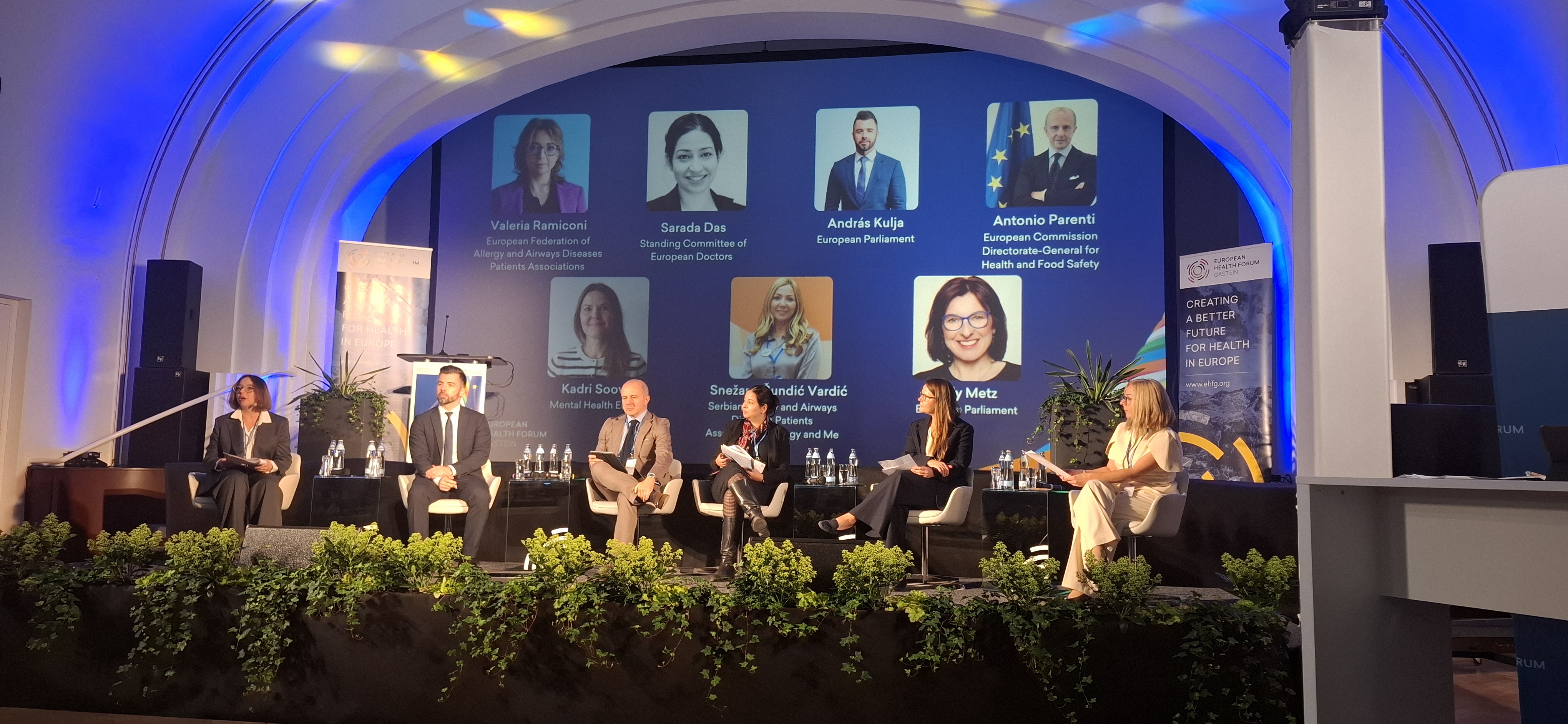
The session started with a very powerful introduction from Snežana Šundić – Vardić, atopic eczema patient and President of EFA member Allergy and Me, Serbia. Snezana shared her experience as patient, mother of a child with atopic eczema and patient adovcate, highlighting the often invisible and overlooked complexity of a life with a disease that affects the entire life not just of patients, but also of their families and caregivers.
“Atopic eczema gives us a powerful example of a wider challenge faced by people living with non-communicable diseases. When physical symptoms and mental health are treated separately, patients and families are left alone to carry the space between different services. Too often, they become the coordinators of their own care when they have the least energy to do so.”
Then, speakers highlighted the importance of recognising the need for a more holistic approach to care that doesn’t separate physical, more visible, symptoms from the often invisible psychological and emotional burden.
“Mental health should not be treated as an add on to NCD policies, but as an integral part of how we prevent, treat and manage chronic conditions. This should mean more integrated care and better support for patients and carers, rather than addressing these needs in separate silos.” – Tilly Metz, Member of the European Parliament, through a video intervention.
“It’s really important to ask ‘what does this person need to live well with this condition?’, and having an approach where supporting the person in all aspects of their life is the norm and not just ‘what kind of service we should direct them towards’.” – Kadri Soova, Mental Health Europe.
When discussing possible ways in Europe to move towards a more integrated approach to care that looks at the patient as a whole beyond just the physical symptoms, speakers highlighted the importance of sharing best practices and working together among Member States, the need for data and science-based evidence, and the important role played by the personal connection between healthcare professionals and patients.
“Personal touch and personal connection is so important within the patient doctor relationship. Doctors need to have time to talk to patients and this is something hampered by workforce shortages. It’s important to continue policies in this area to make sure not only that doctors that are available have time, but also that services are available everywhere regardless of where patients live.”– Sarada Das, CPME.
“What we can make as a Parliament and decision makers together is reports and recommendations to create motivation for Member States. It’s very important to have the WHA resolution and science-based documents because based on these we can include or expand our text in our legislations or even parliamentary reports. If we have reports with evidence and clear data it is a very strong argument at the table, it really matters.” – András Tivadar Kulja, Member of the European Parliament.
“The mental health implication of NCDs is often overlooked. It’s important to maintain and continue this idea that in many challenges we are much better together and mental health is indeed one of those.” – Antonio Parenti, European Commission
A guided tour into the invisible burden of atopic eczema
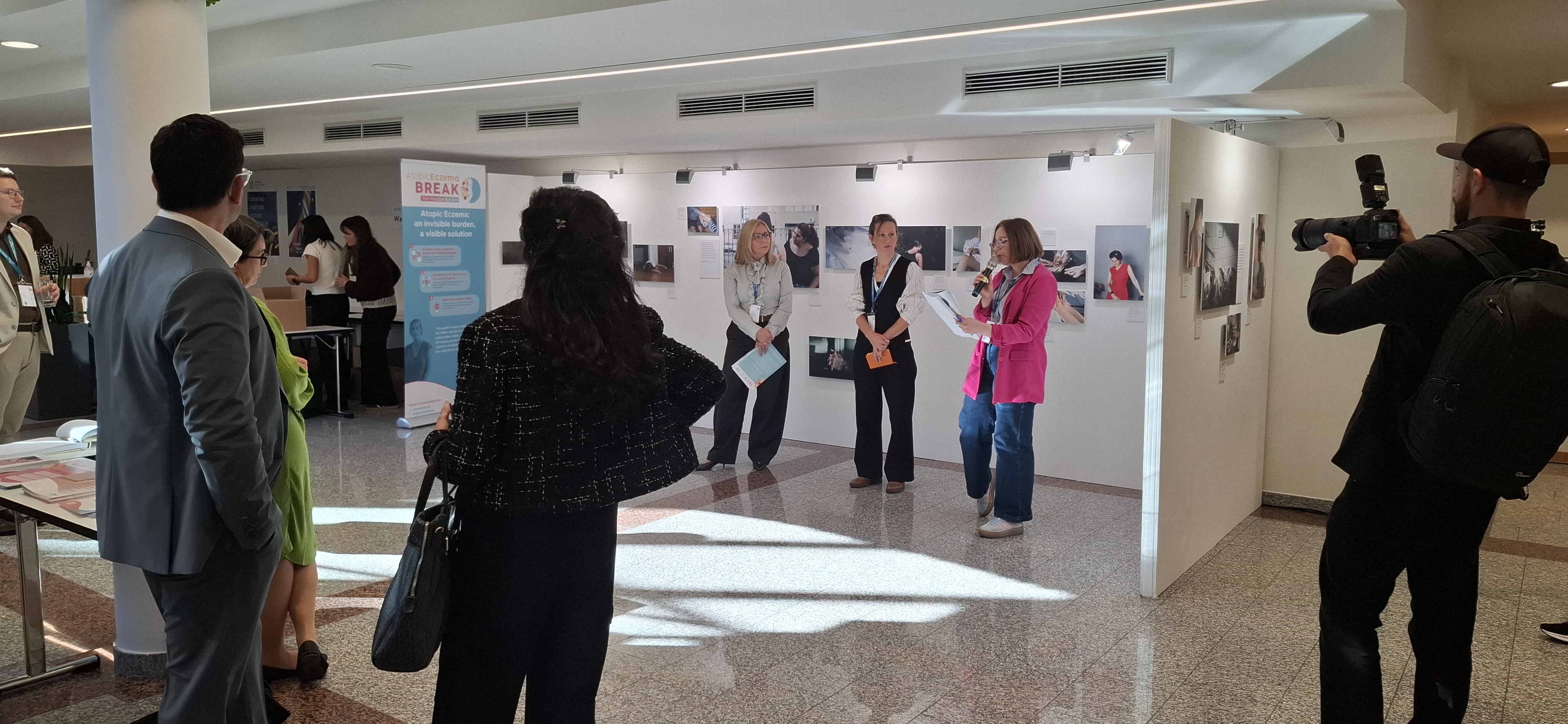
During the entire duration of the Forum, EFA opened the Atopical Lives photo and video exhibition, where participants could better understand what it is like to live with atopic eczema through the powerful photos by Lurdes R. Basolì and interactive video booths. The photos featuring patients from across Europe in their daily lives, including positive and challenging moments, showed their energy, preoccupation, resignation, but also their strength, pride, and resilience.
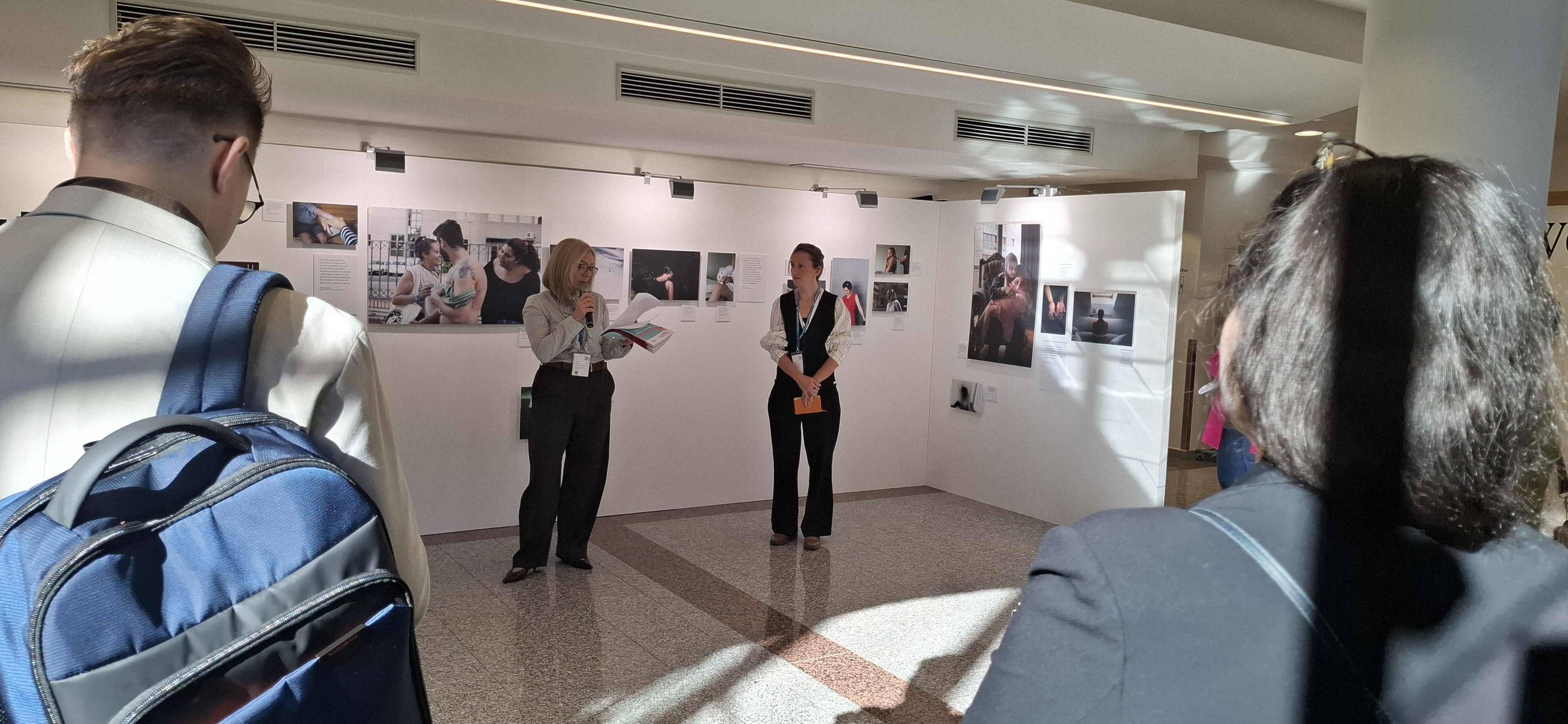
One of the most touching moments of the exhibition, has been the presence of Snezana who shared once more her experience as a patient and mother of child with atopic eczema, bringing to life the powerful messages conveyed through the photos.
“These photographs do not ask us to look at the patients and their disease, they ask us to recognise the person behind the skin. Behind these photographs are relentless itching, tears, pain, repeated treatments, and sleepless nights. There are difficult mornings, days organised around the unpredictable condition of the skin. This is what Atopical Lives allows us to see and this is why we need to break the invisible burden.“ Snezana continued.
A moment to remind all participants that, as highlighted by EFA Director of Operations and Programmes Valeria Ramiconi, recognising the burden is only the first step: “these pictures are not just pictures, they are a call to action. In 2025, WHA adopted a resolution recognising skin disease as a global health priority. And that provides a blueprint of action across all relevant areas. Now it’s time to act and Europe must make the resolution a reality.”
Bringing the impact of atopic eczema on mental health higher in the EU agenda
As highlighted by the statement of the World Skin Health Coalition a the event, what needs to comes after the adoption of the resolution is equally important “Success will ultimately be measured not by the existence of a global framework, but by its translation into national policies, plans, and programmes that improve the lives of people affected by skin diseases and conditions. Governments, healthcare professionals, researchers, and civil society organisations each bring unique expertise and perspectives. By working together, we can ensure that policies are informed by lived experience, address mental health alongside physical health, and deliver outcomes that matter most to people, regardless of where they live in the world.”
In this context and with the ongoing reflections on the future of the EU NCD Initiative, EFA’s participation in the European Health Forum Gastein this year was a powerful message to stress the need for integrated, multi-disciplinary care for patients with atopic eczema. As Valeria highlighted: “As the EU reflects on the new common approach to NCDs, we must ensure that mental health and psychological wellbeing are not treated as a secondary consideration, but they must be embedded as core elements of any comprehensive NCD framework”.
EFA acknowledges and thanks the Sanofi-Regeneron Alliance for the unrestricted support that made the exhibition and policy discussion at the European Health Forum Gastein 2026 possible.