Atopic eczema affects much more than the skin. It can disrupt sleep, mental health, relationships, school and work, while also creating significant costs for patients and families.
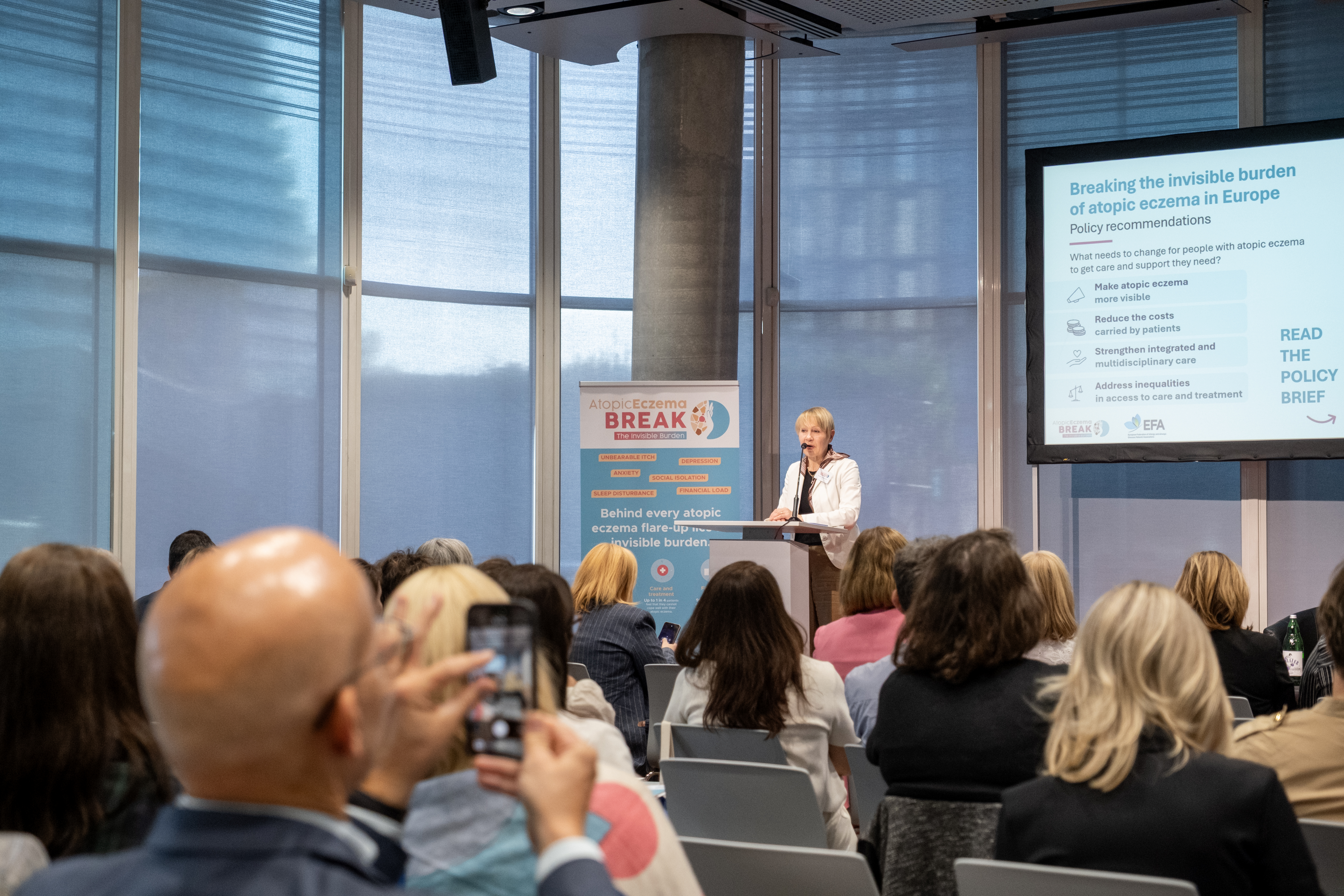
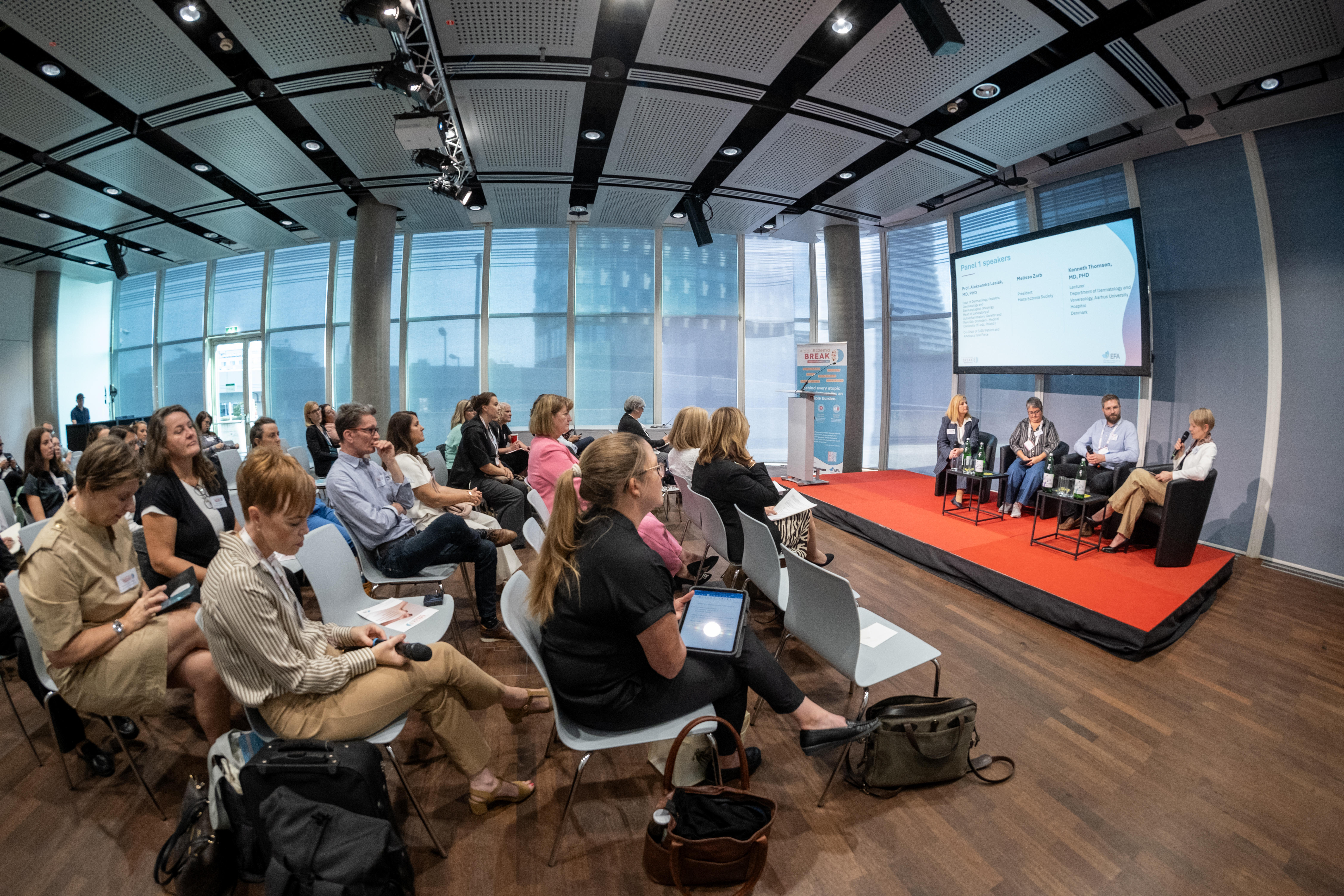
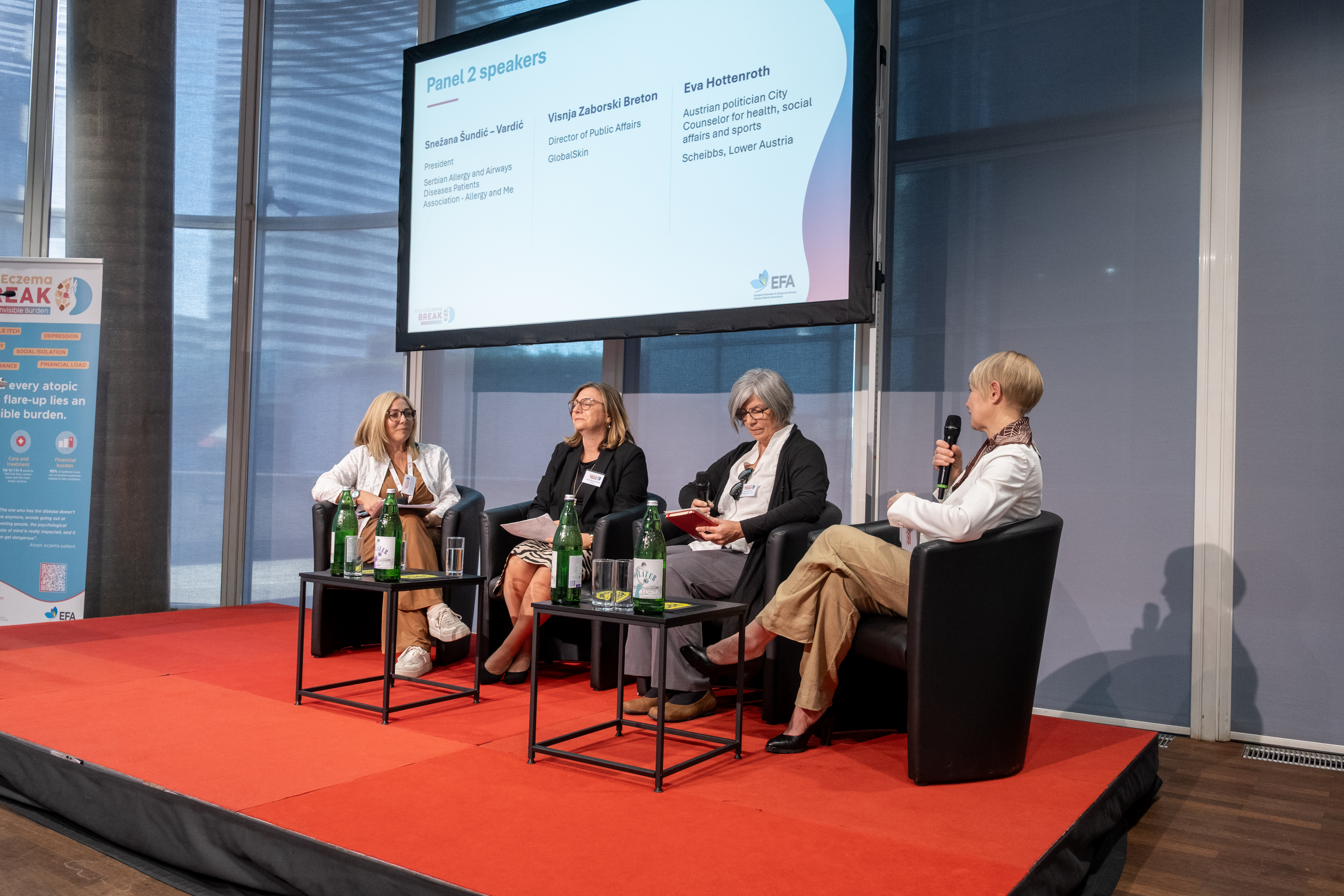
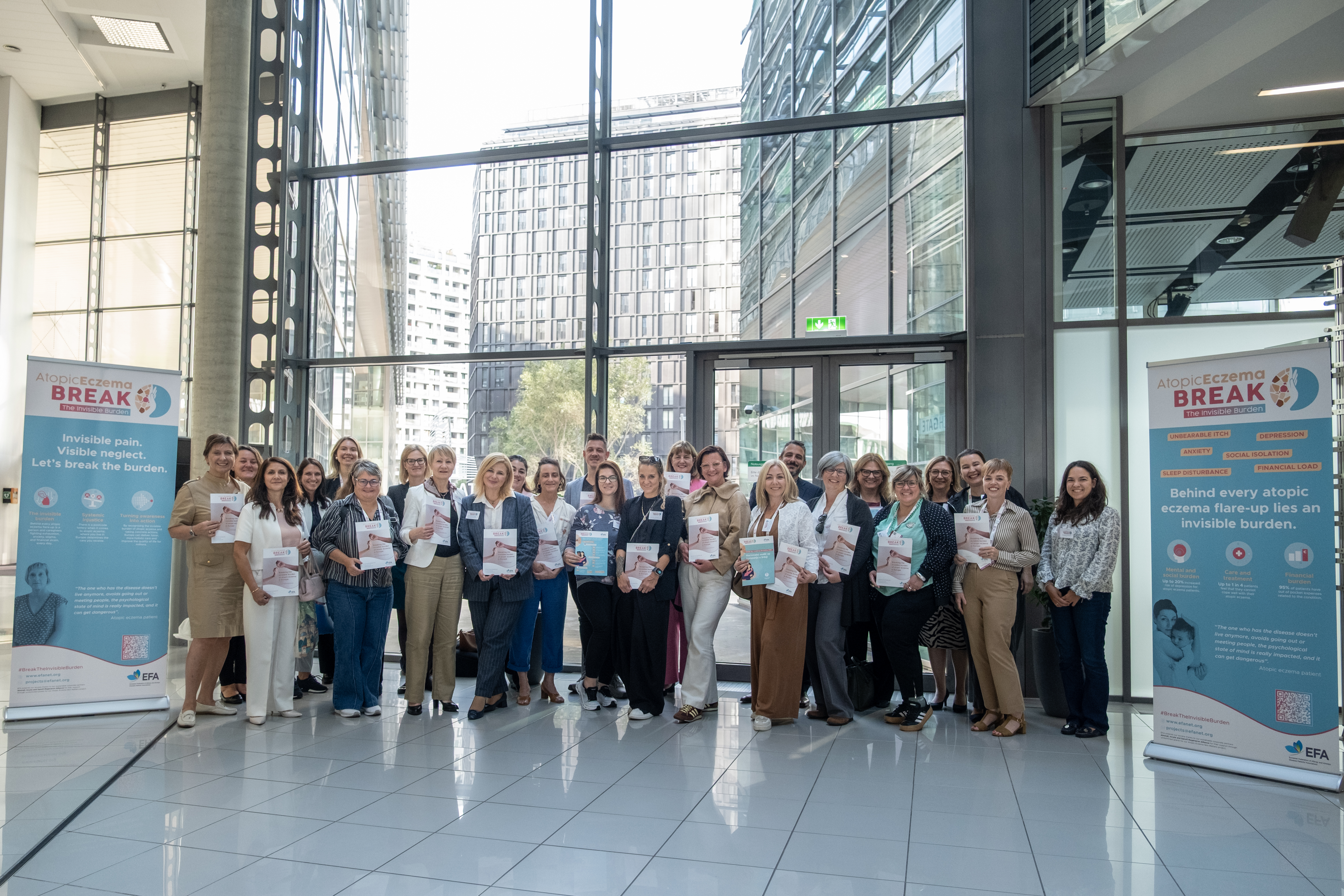
On 2 October 2026, EFA brought patients, dermatologists, researchers and policymakers together in Vienna to discuss what needs to change and launched the second phase of the Atopic Eczema #BreaktheInvisibleBurden campaign and a new policy brief, Breaking the invisible burden of atopic eczema in Europe co-developed with 12 members of the EFA Atopic Eczema Community.
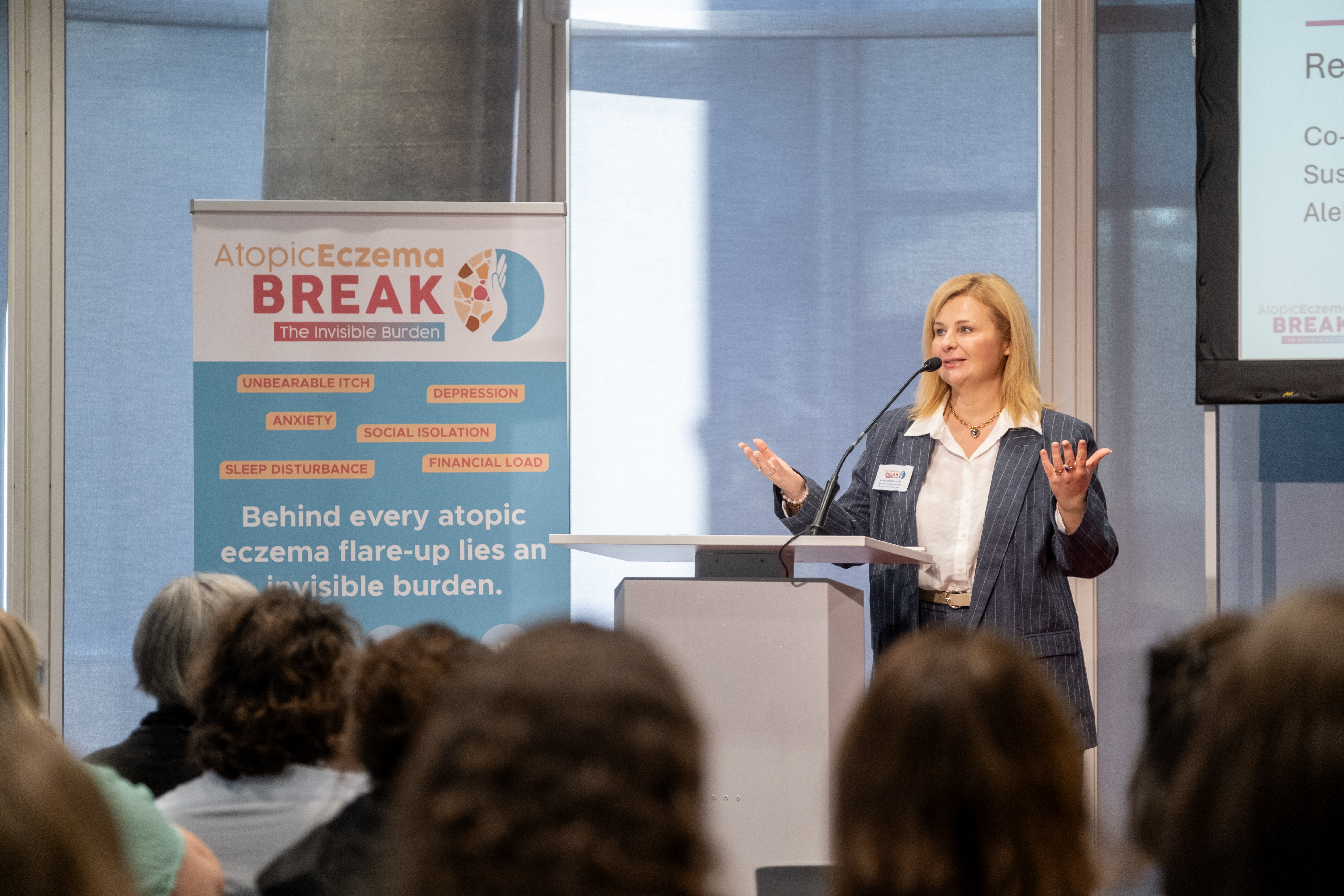
The session, held during the same week of the EADV Congress 2026 and co-chaired by Prof. Aleksandra Lesiak, dermatologist and co-chair of the EADV Patient Advocacy Task Force, looked at how the WHO Resolution on Skin Diseases can move from global recognition to practical action for people living with atopic eczema in Europe.
“Across Europe, patients tell us that the burden of atopic eczema goes far beyond the skin. Governments and health systems need to recognise the whole burden and act on it, with affordable care, better-connected services and support for mental health and self-management.” Susanna Palkonen, EFA Director and moderator of the session
Better care should start earlier
For many patients, better care starts with something basic: knowing what to do after the first consultation. Healthcare professionals also need the knowledge and referral pathways to help patients move through the system without unnecessary delays.
“Patients need a clear roadmap from the first consultation: how to use their treatment, how to manage their skin at home and when they need specialist care.” Prof. Aleksandra Lesiak, dermatologist and Co-Chair of the EADV Patient Advocacy Task Force.
Treatment of atopic eczema can involve dermatologists, GPs, paediatricians, allergists, pharmacists, nurses and mental-health professionals. When these services do not connect, patients and families are often left alone to coordinate their own care. That is why closer cooperation between healthcare professionals and patient organisations is highly important.
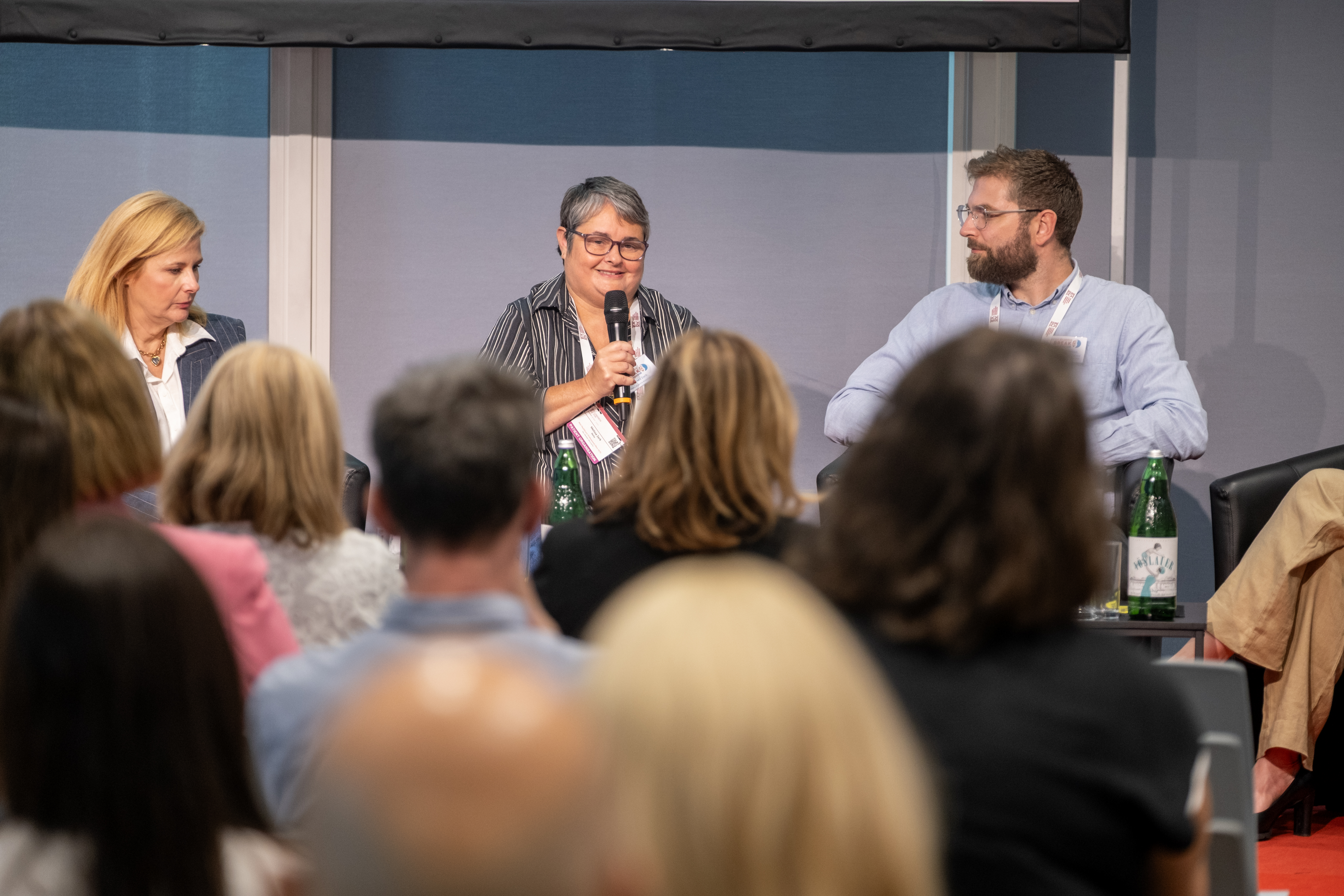
“Patient organisations and dermatologists need to work hand in hand. Patients bring the reality of living with eczema every day, while healthcare professionals bring the clinical expertise.” Melissa Zarb, President of the Malta Eczema Society
New technologies can also support more personalised care. But they should complement, not replace, the relationship between patients and healthcare professionals.
“AI can help us see patterns that the human eye cannot and use patient data to target treatment better. But technology cannot replace human contact. Patients are experts in their own skin too.” Dr Kenneth Thomsen, Aarhus University Hospital
The burden is financial too
A study of people with atopic eczema in nine European countries found that participants spent an average of €927 a year out of pocket on healthcare, with emollients and moisturisers accounting for the largest share.
For many patients, these are essential parts of managing the disease. EFA’s new policy brief calls for the financial burden of atopic eczema to be better recognised and for essential care to become more affordable.
Patients need information they can trust
When itching becomes unbearable, people want answers quickly. Increasingly, that can mean turning to social media or digital tools. Reliable information therefore needs to be easy to find, understandable and useful in everyday life.
“When itching is severe, patients want answers immediately. We need to translate dermatologists’ advice into patient language.” Snežana Šundić-Vardić, President of Allergy and Me, Serbia
Patient organisations are an important part of that work. They also know where patients struggle, where knowledge is missing and where care is falling short.
Turning the WHO Resolution on Skin Diseases into action
The Vienna discussion came at an important moment for skin health. In 2025, the World Health Assembly adopted a Resolution on Skin Diseases, giving governments a stronger global commitment to address the burden of skin conditions. WHO is now working on a Global Action Plan on Skin Diseases. The next challenge is turning that global commitment into change in countries.
“You cannot achieve policy change without working with many different stakeholders, with patients first and foremost.” Visnja Zaborski Breton, Director of Public Affairs at GlobalSkin
Implementation will require patients, healthcare professionals, researchers and decision-makers to work together, with national patient organisations helping identify the gaps that matter most in their countries.
“I started as a mother, not as a politician.” Eva Hottenroth, City Councillor for Health, Social Affairs and Sports in Scheibbs, Austria. Her experience showed how recognising a health problem, organising around it and finding political support can turn local concerns into action.
What European healthcare systems must do to #BreakTheInvisibleBurden?
EFA’s new policy brief brings these discussions together into practical recommendations for European and national policymakers. The priorities are clear: recognise the full burden of atopic eczema, make essential care more affordable, and build better-connected services around patients. That also means stronger expertise in primary care, better access to treatment and self-management support, action on inequalities, and a meaningful role for patients and patient organisations in shaping policies and services.
At European level, EFA is calling for atopic eczema to have a more visible place in health policy and for countries to use the momentum created by the WHO Resolution to improve care in practice.
The discussion in the Austrian Press
The Vienna policy session was also covered by Austrian health publication Gesund.at in its article “Atopische Dermatitis: Das Unsichtbare sichtbar machen” or “Atopic Eczema: making the invisible visible.” The article looks at the burden of atopic eczema, EFA’s new policy recommendations and what the WHO Resolution could mean for national health policy. It also highlights an important gap in Austria: the need for better data on how many people are affected and the burden they face. Read the full article here.
The new policy brief is part of EFA’s #BreakTheInvisibleBurden campaign, developed with patient organisations across Europe.
The WHO Resolution has created an important opportunity. Now it needs to translate into healthcare that reflects the full reality of atopic eczema: affordable care, connected services, reliable information and a stronger patient voice.
Read EFA’s policy recommendations: Breaking the invisible burden of atopic eczema in Europe
Explore and join the #BreakTheInvisibleBurden campaign
For information and support in Austria, visit Österreichische Lungenunion, an EFA member organisation
The event was featured in Gesund.at - “Atopic dermatitis: making the invisible visible”